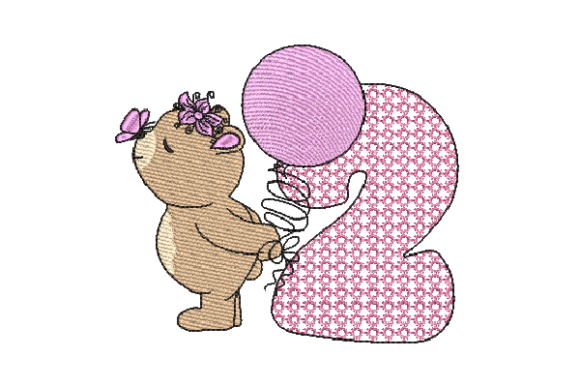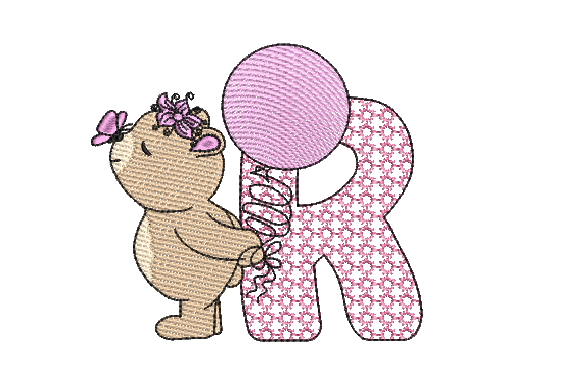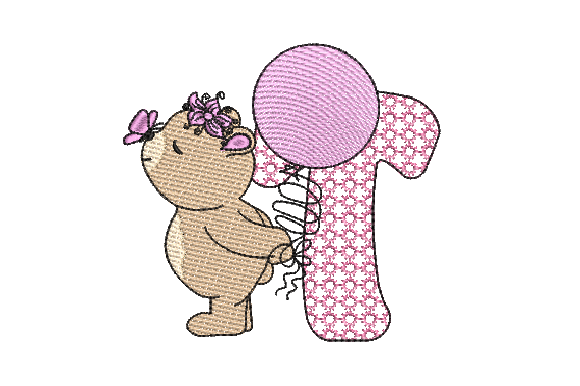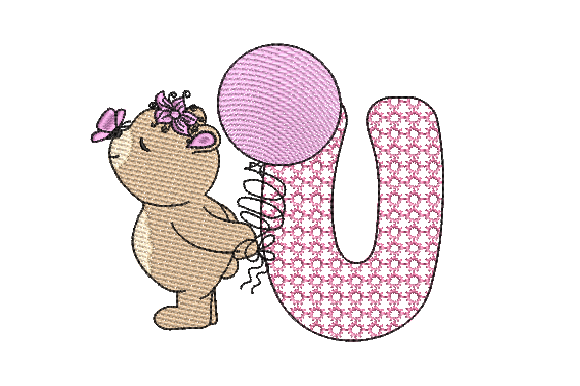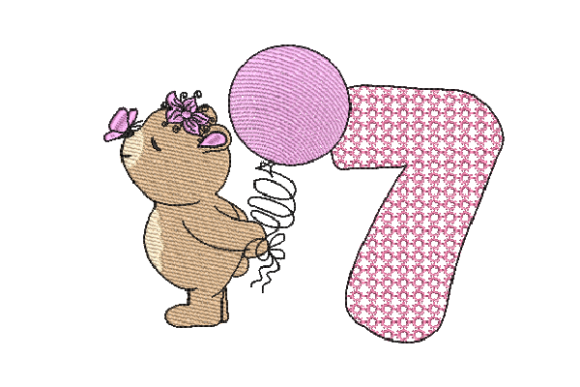
Number 7 Cute Teddy
First Impression: Soft, Playful, and Instantly Recognizable
Walking past a craft fair booth, Number 7 Cute Teddy doesn’t shout — it smiles. It lands somewhere between nostalgic childhood sketchbook charm and modern minimalist cuteness. The “hand-drawn” aesthetic described in the product listing isn’t just marketing fluff; it’s the design’s strongest selling point. There’s zero stiffness, no over-engineered symmetry — just gentle curves, light fill, and intentional imperfection. That makes it feel handmade *before* it’s even stitched. For Birthdays — especially milestone years like 7th birthdays — it carries warmth without being cutesy-overload. It reads as soft, friendly, and approachable, not festive or cartoonish. That subtlety is gold on handmade products where authenticity matters more than flash.
Where It Shines: Craft Fair Product Placement
In a crowded market aisle, Number 7 Cute Teddy stands out best when scaled intentionally — not too small, not too dominant. On a linen tea towel? Perfect at 3.5–4 inches wide: legible from six feet away, charming up close, and balanced against natural fabric texture. As an apron embroidery near the pocket or chest? Ideal at 2.75 inches — enough personality to catch eyes but never overwhelming the garment’s function. On a cotton tote bag? Go slightly larger (4.25") centered low on the front panel — it becomes a quiet statement, not a logo. And for embroidered patches? This design is *made* for it. Its light fill and minimal underlay mean crisp edges, low stitch density, and clean peel-away results — critical when you’re stitching 50+ patches for booth inventory.
It also works beautifully on small-format items: fabric pouches (especially drawstring or zippered gift pouches), pillow covers with neutral backgrounds, and structured caps — provided you test hoop placement first. The sketch-like lines hold up well on curved surfaces if stabilized correctly, unlike dense satin-stitch numbers that buckle or distort.
What Holds It Back (and How to Fix It)
Number 7 Cute Teddy isn’t universally forgiving. Its charm lives in delicate line work and subtle shape definition — meaning it can disappear on dark fabric without high-contrast thread colors. Always test stitch on your intended base: navy denim, charcoal linen, or black canvas will require bright white, butter yellow, or coral thread to preserve clarity. Also avoid pushing it below 2 inches in width. Tiny details — like the teddy’s ear curve or the slight taper of the “7” — blur easily on textured towels or thick terry cloth. Dense stitch areas are minimal here, but the light fill means stabilizer choice is non-negotiable: medium-weight tear-away for stable wovens, cut-away for knits or stretchy fabrics.
Don’t assume it works on every surface. Skip heavy quilting cotton unless pre-shrunk and pressed flat — puckering ruins the hand-drawn illusion. Avoid metallic threads unless you’ve tested tension first; the fine lines won’t forgive inconsistent feed. And never skip a real mockup before batch production. A printable mockup helps online, but nothing replaces holding a stitched tea towel in your hand and watching how light hits those soft edges.
Selling Power: Booth Impact & Online Appeal
At a craft fair, Number 7 Cute Teddy performs best as part of a curated *theme*, not a standalone hero. Pair it with other numbers from the set (if available), simple botanical motifs, or neutral-toned embroidery to build visual rhythm across your display. Customers notice it first on giftable items: a tiny embroidered pouch holding birthday cookies, a linen pillow cover beside a stack of matching tea towels, or a child-sized cap with the design nestled above the brim. That’s where its handmade quality shines — it feels personal, intentional, and full of quiet joy.
For Etsy sellers and digital embroidery file shops, this design photographs exceptionally well. Its low contrast and open structure eliminate harsh shadows and thread glare. Use natural light and a clean background, and highlight texture — show how the stitches sit *on* the fabric, not *in* it. That reinforces perceived value. Buyers scanning listings instantly grasp its versatility: “Oh — I can use this on my shop’s custom aprons *and* my daughter’s birthday tote.” That dual-use perception boosts conversion.
Production Reality Check for Small Shop Owners
If you’re running a one-person embroidery business or prepping for a weekend market, Number 7 Cute Teddy is a smart batch-production candidate — but only if you respect its limits. Its quick stitch-out time (thanks to minimal underlay and light fill) means faster turnarounds and lower thread consumption. That directly supports profitability on small shop products like $28 embroidered pouches or $42 linen pillow covers. But don’t skip the fundamentals: always confirm hoop size compatibility before loading files, check spacing between design elements if combining with text, and verify commercial licensing terms — especially if selling finished products beyond personal use.
Before stitching your first customer order, do this: stitch a test on scrap fabric *identical* to your production base; compare at least two thread color options side-by-side; inspect stitch density visually (no gaps, no overcrowding); and hold the piece at arm’s length — does the teddy still read clearly? If yes, you’re ready. If not, adjust stabilizer or scale.
Final Thought: A Quiet Anchor in Your Design Assets
Number 7 Cute Teddy won’t dominate your booth like a glittery banner — and that’s its strength. In a sea of loud, saturated, over-designed craft fair products, it offers breathing room, warmth, and unmistakable handmade appeal. It elevates a plain tote into a meaningful birthday gift. It turns a basic apron into a keepsake. And for Etsy sellers building cohesive brand consistency, it fits seamlessly into a soft, thoughtful, story-driven aesthetic — no rebranding required. Just add thread, stabilizer, and intention. Done right, Number 7 Cute Teddy doesn’t just sell. It connects.