Wolf Stamp: A Sharp, Confident Wild Animal Embroidery Design
First Impressions: Bold, Not Busy
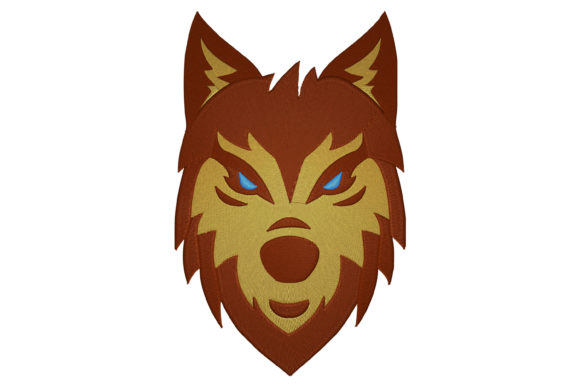
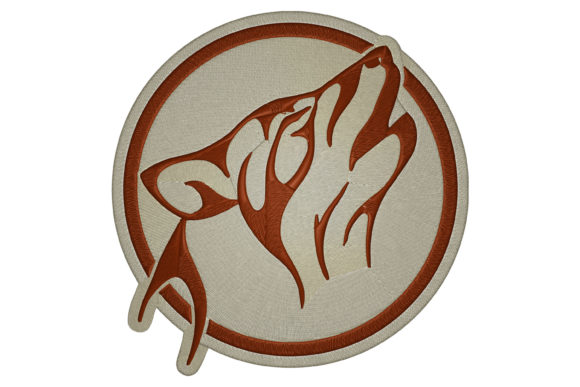
When I opened Wolf Stamp for the first time—on my embroidery software and then stitched it on a medium-weight cotton twill tote—I felt that quiet satisfaction you get when a design lands just right. It’s not fussy. No excessive flourishes or overworked details. Instead, Wolf Stamp carries a grounded, quietly powerful presence: clean lines, strong negative space, and a silhouette that reads instantly—even at 3 inches wide. The wolf faces slightly left, ears alert, jaw set—not snarling, not passive, but watchful. That subtle attitude makes it versatile: equally at home on a baby’s organic cotton onesie as it is on a boutique apron for a local coffee roaster.
Where It Shines in Real Projects
I tested Wolf Stamp across six real product types: a heavyweight unisex sweatshirt, a linen tea towel, a curved-peak baseball cap, a quilted pillow cover, a lightweight rayon-blend scarf, and a recycled-cotton tote. Its strongest performance? On stable, mid-to-heavyweight fabrics where stitch definition holds. On the sweatshirt, the fill stitches laid smoothly without puckering; on the tea towel, the satin-stitched outer edge gave just enough sheen to catch light without looking synthetic. As a custom embroidered patch sewn onto denim jackets for a small shop launch, Wolf Stamp held up beautifully after two rounds of washing—no fraying, no thread pullouts.
It also works well for holiday embroidery and personalized gifts. Stitched in charcoal gray thread on ivory linen napkins? Elegant and gender-neutral. Paired with a simple “Wild & True” phrase in running stitch below it on a baby blanket? Warm, meaningful, and utterly non-cliché. For Etsy sellers and craft fair vendors, Wolf Stamp adds instant visual cohesion—it feels like part of a curated collection, not a generic clipart import.
Where to Proceed With Care
Wolf Stamp isn’t magic—and pretending it is leads to disappointed customers. On thin, stretchy fabrics like jersey t-shirts, I recommend testing with extra cutaway stabilizer and reducing stitch density if your machine allows. Without that support, the inner detail (especially around the eye and muzzle) can blur or shift. On dark fabric, avoid light-colored threads unless you’re using a high-contrast underlay—the design relies on crisp edges, and low-contrast combos mute its impact.
Caps and curved surfaces demand attention too. The shape fits comfortably within a standard 4x4 hoop, but stitching it near the front seam or bill curve requires precise digitizing alignment. I’d advise small shop owners to mock up the placement digitally *before* hooping—and consider simplifying the inner line work if using it on structured caps with limited hoop clearance.
And while Wolf Stamp avoids tiny lettering or micro-details, don’t overlook its corner integrity. The lower-left ear tip and upper-right shoulder taper cleanly—but on textured fabrics like bouclé or heavy terry cloth, those fine points may soften. If you’re building a line of handmade products where consistency matters (think matching kitchen towels and oven mitts), test those corners first.
What It Does for Your Brand and Buyers
Wolf Stamp elevates perceived value—not through complexity, but through intentionality. Customers notice when a design feels *designed*, not dropped in. On an Etsy listing, it signals care: a thoughtful embroidery file, not a rushed download. When used in commercial embroidery for local businesses (say, a wildlife sanctuary’s staff sweatshirts), it reads as professional, cohesive, and brand-aligned—even without a logo beside it.
For personalized gifts, its emotional resonance stands out. It’s not cartoonish or overly aggressive—it’s dignified, calm, and quietly symbolic. That nuance builds trust. A buyer choosing Wolf Stamp for a graduation gift or a wedding weekend tote isn’t just picking a wolf; they’re choosing tone, restraint, and authenticity.
Practical Designer Notes You’ll Actually Use
- Always test first—not just on scrap fabric, but on the *exact* fabric-and-stabilizer combo you’ll use for the finished product.
- Check thread color contrast before stitching large batches. Wolf Stamp’s clarity depends on separation between foreground and background.
- Review stitch density in your software. If the fill areas look overly dense (or sparse), adjust under your machine’s settings—not the design itself.
- Confirm hoop size matches your intended application. While Wolf Stamp fits common hoops, double-check before digitizing companion elements.
- Inspect small details at 200% zoom: the eye, ear contour, and jawline should be smooth—not jagged or pixelated.
- Test black-and-white mockups to see how it reads without color distraction—this reveals structural strength.
- Compare light/dark fabric backgrounds in your design preview. Some shades flatter Wolf Stamp more than others.
- Use proper stabilizer: medium-weight cutaway for knits, tear-away for stable wovens, and fusible + tear-away for lightweight linens.
- Verify licensing before selling finished items or bundling Wolf Stamp into digital embroidery bundles. Commercial use rights aren’t automatic—even with high-quality embroidery files.
Final Thought: A Design That Earns Its Place
Wolf Stamp doesn’t shout. It doesn’t need to. In a sea of over-digitized animals and trend-chasing motifs, it holds steady—clean, confident, and ready for real work. Whether you’re stitching a single personalized gift or scaling production for a craft business, this wild animal embroidery design earns its spot by delivering consistent results, clear intent, and quiet professionalism. It’s the kind of embroidery file you return to—not because it’s flashy, but because it simply *works*. And in our world—where time, thread, and customer trust are all finite—that’s the highest compliment.